Forgiveness and moral redemption
Great ExpectationsForgiveness and moral redemption in Great Expectations develop through Pip’s recognition that his pursuit of gentility has made him ashamed of home and disloyal to those who cared for him. His later kindness toward Miss Havisham and Magwitch does not erase the harm done or reverse their fates; instead, it marks a change in how he sees other people and what he owes them. The novel makes redemption a difficult practice of acknowledging wrong, receiving another’s suffering without contempt, and extending compassion where judgment alone would be easier.
Memory, Responsibility, and the First Link
The adult Pip frames moral change as a chain begun by a single memorable day. A life, he reflects, would have followed a different course had its first link not been formed; the image allows the narrative to connect a child’s seemingly small impressions to the long consequences of later choices. His account is not merely a record of what happened to him: it repeatedly revises the younger Pip’s explanations by recognizing the responsibility he could not or would not see at the time.
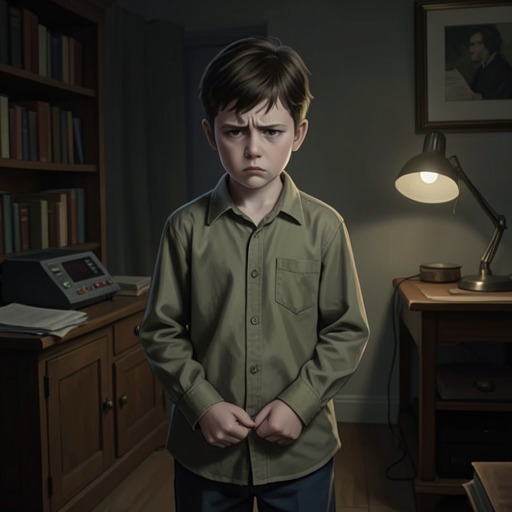
That retrospective judgment matters when Pip considers his shame of home. His home had been difficult because of Mrs. Joe Gargery’s temper, but Joe had made it a place of trust: the parlour, kitchen, front door, and forge had once seemed full of dignity and promise. After Pip encounters Estella and absorbs the distinctions she makes between him and a gentleman, the same surroundings appear coarse and common. Looking back, Pip refuses to settle the question of how much blame belongs to himself, Miss Havisham, or his sister. The change in him is undeniable, and his later narration preserves it as a moral fact rather than an excuse.
The apprenticeship to Joe brings this change into daily life. Pip had imagined entering the forge as the beginning of a distinguished and happy future; when that future becomes real, he feels only the coal dust and the weight of a life he considers diminished. He remembers the apprenticeship as so bleak that the road ahead seemed covered by a heavy curtain. Yet he also records one point in his own favor: through the term of his indentures, he never complained to Joe. The qualification is modest, and that modesty is part of the reckoning: Pip’s later moral understanding begins by seeing both his failures and the limited grounds on which he can honestly claim restraint.
Love and the Recognition of Harm
Pip’s love for Estella shows how strongly feeling can persist alongside knowledge. He recognizes that his attachment works against reason, promise, peace, hope, and happiness, but that recognition does not restrain it. In retrospect, he clarifies that he did not love her because she embodied an ideal of human perfection; he loved her because he found her irresistible. This correction exposes the danger of turning desire into a story that excuses whatever the lover does or suffers.
The collapse of Pip’s expectations forces a sharper moral recognition. Miss Havisham had not intended Estella for him; Pip had been used at Satis House as a means of provoking the relatives and as a model on which Estella could practise her coldness. But the deepest pain, as he tells it, is that he has deserted Joe for the convict, a man whose crimes he does not even know, and who may be condemned to die. The reversal breaks the connection Pip had imagined between wealth, gentility, and moral worth. His shame is no longer simply that his prospects have failed: it is that, while dreaming of elevation, he has behaved badly toward the people whose loyalty was real.
Pip understands the depth of that failure in part because he cannot bring himself to return to Joe and Biddy. Their simplicity and fidelity might have comforted him, but he feels his conduct toward them to be too worthless to face. The separation is therefore not evidence that they have rejected him; it is the consequence of his own shame. Later, when Joe and Biddy care for him, Pip recognizes their quiet kindness as an answer to wrongdoing that neither reproaches nor pretends the past never happened.
Miss Havisham: Remorse and Mercy
When Miss Havisham asks Pip to write “I forgive her” beneath her name, forgiveness becomes an explicit request rather than an abstraction. She hands him the tablets and pencil chain, and the trembling of her hand accompanies her appeal: she fears that her broken heart may be dust before he can grant it. Pip answers that he can forgive her now. He admits that his life has been blind and thankless and says he wants forgiveness and direction too much to remain bitter.
The exchange turns on mutual recognition rather than a simple absolution. Miss Havisham kneels at Pip’s feet and weeps, a sight that shocks him because he has never seen her shed a tear. She says she did not understand what she had done until she saw in Estella a reflection of her former self. Her repeated cry of regret gives shape to remorse, but Pip does not let sympathy for Miss Havisham replace concern for Estella. He urges her to repair whatever she can of the harm done by withholding part of Estella’s nature, insisting that action now would matter more than grieving over the past for years.
Miss Havisham explains that at first she meant to save Estella from suffering like her own. Pip hopes this is true, but the explanation does not undo the damage. Their reconciliation is ethically significant precisely because it holds remorse and accountability together: Pip releases his bitterness toward Miss Havisham while still naming the harm she inflicted and asking her to address its consequences. Forgiveness changes how he responds to her; it does not make the past innocent.
Magwitch, Joe, and the Measure of Character
Pip’s response to Magwitch’s suffering offers another test of moral change. During their return by water, Magwitch is hunted, wounded, shackled, and gravely injured. Pip’s former repugnance has melted away. He sees a man who intended to be his benefactor and who had felt affectionately and generously toward him with constancy over many years. Pip judges Magwitch a much better man than he himself had been to Joe, a comparison that brings the two relationships into the same moral frame.
That recognition does not make the situation safe or easy. Magwitch has been tried, escaped prison, returned from transportation under a life sentence, and been connected to the death of the man who caused his arrest. Pip doubts he will receive lenient treatment and understands that Magwitch’s injuries may make death preferable to the punishment awaiting him. Yet he remains beside him, takes his place at his side, and tells him he is grieved that Magwitch came home for his sake. Compassion here is not a denial of the law or the past; it is a refusal to reduce a suffering person to the worst account of his crimes.
At Magwitch’s bedside, Pip reveals that Estella survived, has powerful friends, is living as a lady, and is very beautiful; he also tells him that he loves her. Magwitch raises Pip’s hand to his lips before quietly dying. Remembering the parable of the two men who went to the Temple to pray, Pip finds words that ask mercy for a sinner. The prayer neither declares Magwitch innocent nor claims knowledge of his final judgment. It places him within a shared human need for mercy, while the hand-kiss gives their relationship a last, intimate expression of gratitude and affection.
Redemption as Changed Conduct
The meaning of Pip’s transformation is clarified by his return to Joe and Biddy. During his illness, he reflects that Joe never tells the story of his own suffering, and that Biddy does not complain either. When Joe visits, he delicately avoids exposing a childhood secret and, with Biddy’s help, cares for Pip without humiliating him. Their kindness makes Pip think about how his great expectations have dissolved like the mists of the marshes. As he grows stronger, he also notices Joe becoming less at ease, and understands that he has given Joe reason to fear that prosperity would make him cold and cast him off.
This late recognition completes a pattern begun by Pip’s shame of home. He once mistook refinement and social advancement for moral improvement; experience teaches him to judge himself by constancy, gratitude, and care. Redemption does not arrive as a reward that cancels debt. It takes the form of a clearer understanding of whom he has injured, a willingness to stand by Magwitch when his former status and expectations have collapsed, and renewed gratitude for Joe and Biddy. The novel’s account of forgiveness is consequently both compassionate and unsparing: people may be met with mercy, but the past remains part of what they must learn to understand.